
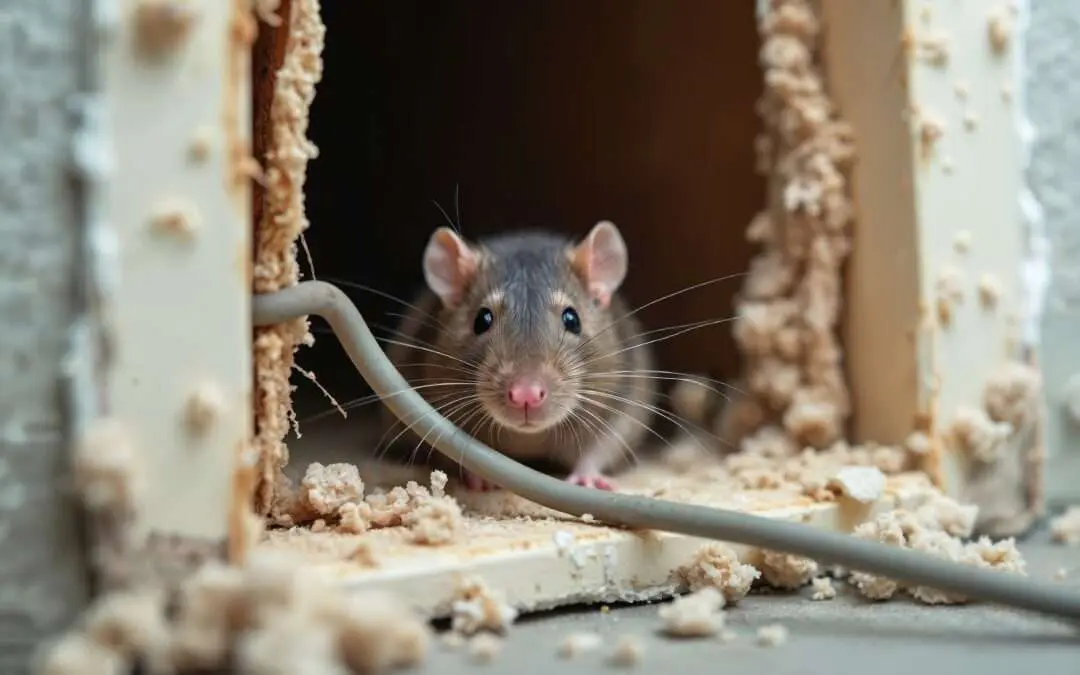
Inside this Article: How to get rid of roof rats?
-
Remove the rats: Place snap traps along active runways, such as walls, attic beams, and other areas with droppings, grease marks, or signs of activity.
-
Block entry points: Inspect the exterior and seal gaps around roof vents, fascia boards, utility lines, and other openings that give roof rats access to attics and walls.
-
Remove attractants: Pick up fallen citrus and fruit, fix dripping water sources, trim dense landscaping, and secure pet food, garbage, and other food sources.
Roof rats often settle around Phoenix homes where they find easy access to food, water, shelter, and entry points. Knowing how to get rid of roof rats starts with identifying what draws them to your property and where they travel, nest, and enter your home.
As a trusted Phoenix pest control company, Sage Solutions Pest Control understands what attracts roof rats to local homes. This guide covers common Phoenix attractants, signs of roof rat activity, removal steps, and when an infestation requires professional pest control.
Book A Free In-Home Pest Inspection
Contact us online or call us at 623-401-SAGE to schedule a comprehensive in-home inspection. We’ll create a custom treatment plan that eliminates pests on contact, addresses nests, and seals problem pests out for good.
What Attracts Roof Rats to Phoenix Homes
Understanding what attracts rats to your property is an important first step in keeping them out. Phoenix homes often provide roof rats with entry points to food, water, and shelter.
-
Citrus and fruit trees: Ripening and fallen oranges, lemons, grapefruit, and other fruit provide an easy food source.
-
Water sources: Dripping AC lines, hose bibs, bird baths, pet bowls, and pool equipment provide reliable water.
-
Dense landscaping: Palm trees, thick shrubs, and overhanging branches provide shelter and routes to the roof.
-
Unsecured food and waste: Outdoor pet food, compost, and open garbage bins attract hungry rats.
-
Structural gaps: Openings around roof vents, fascia boards, utility lines, and tile roofs provide access to attics and walls.
Removing these attractants and sealing entry points play key roles in how to get rid of roof rats in your house and prevent them from returning. Sage Solutions Pest Control uses integrated pest management to address the source of pest problems.
How to Identify a Roof Rat Infestation in Your Attic or Walls
Roof rats often stay hidden, but they leave signs along the routes they travel and where they nest. Check attics, walls, and roof areas for these common signs:
Roof Rat Droppings
Look for dark, spindle-shaped droppings with pointed ends, especially along walls, attic beams, and other travel routes.
Gnaw Marks
Check insulation, electrical wiring, wood, and plastic pipes for signs of chewing.
Scratching or Scurrying
Listen for movement in ceilings or walls at night, when roof rats are most active.
Grease Marks
Watch for dark smears along walls, rafters, and pipes where rats repeatedly travel.
Nesting Material
Look for shredded insulation, fabric, or plant material tucked into attic corners and wall voids.
Concerned Roof Rats Are Moving Into Your Home?
Call us right away, we can help. We’ll do a thorough inspection to find out how they’re getting in, what’s drawing them to your property, and whether you’re dealing with an active infestation or just a stray visitor. There’s no pressure to book, we’re just happy to help.
How to Get Rid of Roof Rats: A Step-by-Step Plan
Understanding how to get rid of rodents like roof rats fast takes three steps: trapping the active population, sealing entry points, and removing the food, water, and shelter that attract them.
Step 1 — Set Snap Traps Along Active Runways
Snap traps offer a direct method to reduce active roof rat populations. Place traps along walls, fence lines, attic beams, and other areas with droppings or grease marks rather than in open spaces.
Bait traps with peanut butter, dried fruit, or nesting material such as cotton, then check and reset them daily. Avoid relying on glue traps or rodenticide alone, since neither addresses the entry points and outdoor conditions that contribute to recurring roof rat activity. Follow pesticide safety precautions, particularly in homes with children or pregnant individuals.
Step 2 — Seal Every Entry Point (Exclusion)
If you’re figuring out how to get rid of rodents in walls or attics, trapping only solves part of the problem. Seal gaps around AC lines, roof vents, fascia boards, chimney flashing, and garage doors to keep new rats out.
Use galvanized hardware cloth for vents, steel wool and caulk for small gaps, and metal flashing for larger openings. For hard-to-reach areas or tile roofs, our professional rodent control service offers a safer way to find and seal entry points.
Step 3 — Eliminate Attractants Outside
Knowing how to get rid of roof rats outside starts with removing the food, water, and shelter that keep them around your property.
-
Pick up fruit: Harvest ripe citrus and regularly collect fallen fruit.
-
Trim landscaping: Cut back branches that provide roof access and thin dense shrubs along walls and fences.
-
Remove water sources: Fix dripping faucets, empty standing water, and bring pet water bowls inside at night.
-
Secure food and waste: Store pet food, compost, and garbage in tightly sealed containers.
Pay close attention to landscaping along block walls and fences, which roof rats often use as travel routes through Phoenix neighborhoods.
Rats in Walls — A More Difficult Scenario
Knowing how to get rid of roof rats outside starts with removing the food, water, and shelter that keep them around your property.
-
Pick up fruit: Harvest ripe citrus and regularly collect fallen fruit.
-
Trim landscaping: Cut back branches that provide roof access and thin dense shrubs along walls and fences.
-
Remove water sources: Fix dripping faucets, empty standing water, and bring pet water bowls inside at night.
-
Secure food and waste: Store pet food, compost, and garbage in tightly sealed containers.
Pay close attention to landscaping along block walls and fences, which roof rats often use as travel routes through Phoenix neighborhoods.
Common Mistakes That Make Roof Rat Problems Worse
If you’re wondering how to get rid of roof rats naturally, remember that repellents and other DIY methods rarely address every part of an established problem. Some common rat control mistakes include:
-
Relying on peppermint oil or mothballs: These methods do not provide consistent control for established roof rat activity.
-
Using poison without exclusion: Bait does not stop new rats from entering through existing gaps.
-
Placing traps in open areas: Set traps along active travel routes instead.
-
Sealing rats inside: Remove active rats before sealing entry points to avoid trapping them inside walls or attics.
-
Treating only indoors: Remove outdoor food, water, and shelter while addressing indoor activity.
-
Stopping too soon: Continue checking for signs of activity after the initial trapping period.
Download a FREE Home Prep Checklist
Get a complete list of how to prepare your home for professional rodent control services.
When to Call a Professional Roof Rat Exterminator in Phoenix
DIY may work for smaller, accessible problems. Consider professional roof rat control when:
-
Activity appears in multiple areas: You find signs in the attic, walls, garage, or other parts of the home.
-
Rats keep returning: Activity continues after several weeks of trapping and exclusion.
-
You find damaged wiring: Gnawed electrical wires require prompt attention.
-
Entry points are hard to reach: Tile roofs and other elevated areas often require proper access equipment.
Sage Solutions Pest Control inspects the attic, roofline, exterior perimeter, and utility entry points to identify where rats enter and travel. As a family-owned, woman-operated Phoenix company, Sage Solutions Pest Control provides professional rodent control when DIY efforts aren’t enough.
CONTACT US
Book Your Free Inspection
If roof rats keep returning or have moved into your attic or walls, Sage Solutions Pest Control will identify the source and seal active entry points. Get trusted service from a family-owned, woman-operated Phoenix pest control company.